
Why full-frame
An insert window covers the old frame. That's fine when the old frame is sound. But when water has been getting in around a window for years, the damage is behind and below the frame, in the sheathing, the sill plate and the studs. Covering it doesn't stop it. Full-frame replacement exposes the damage, fixes it, and rebuilds the waterproofing so it doesn't happen again.
The process, as you see in our photos
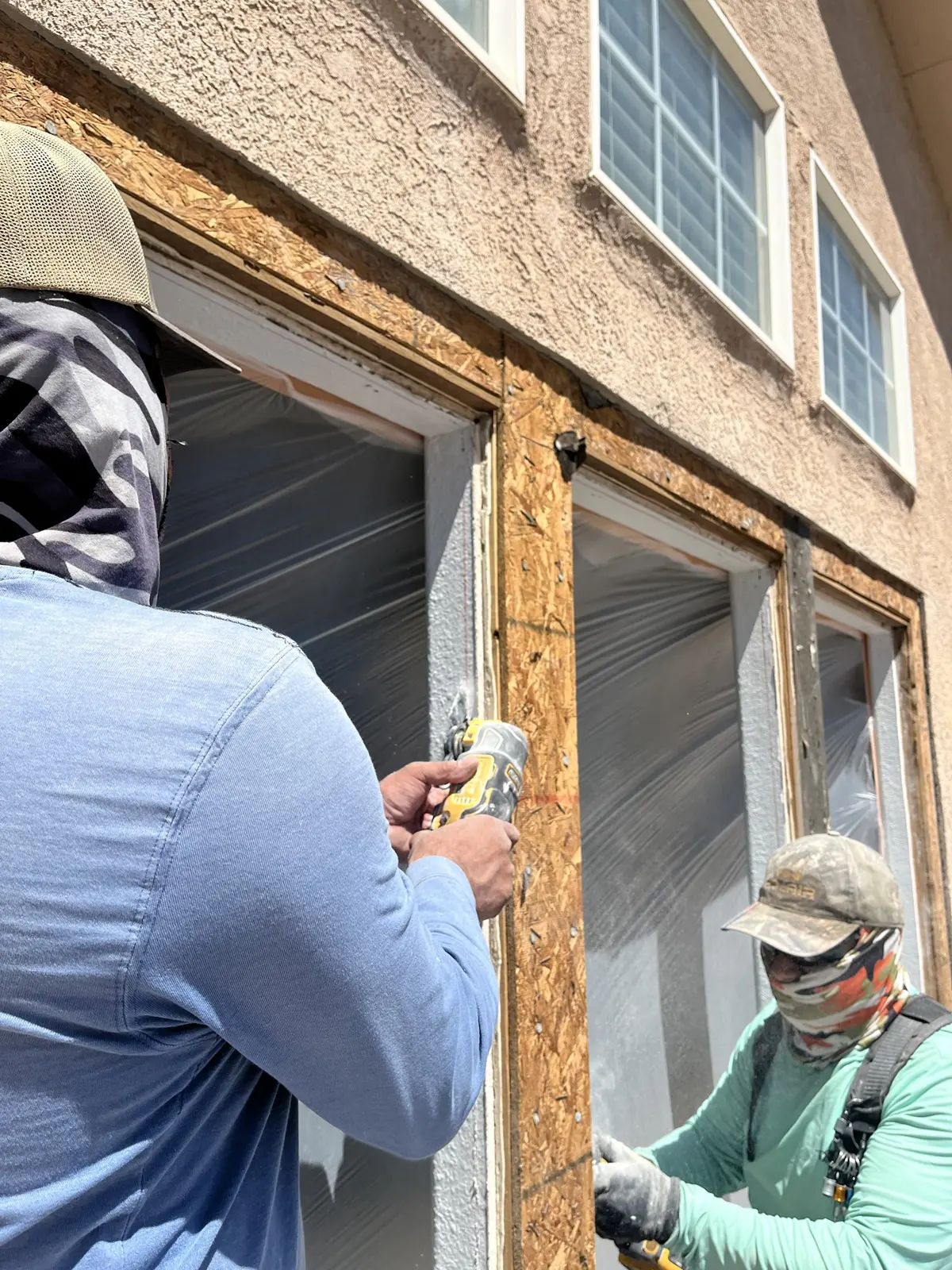
- Cut the stucco. A straight line is marked a few inches outside the frame, and the stucco is cut along it.
- Take out the old window. With the fin exposed, fasteners come out and the old unit is removed, down to the sheathing.
- Inspect and repair. Swollen sheathing or soft framing is cut out and replaced. We show you what we find.
- Sill pan. A sloped flashing at the bottom of the opening turns up at the corners and directs water outward.
- Set the window. The new nail-fin window goes in level, plumb and square, and is fastened.
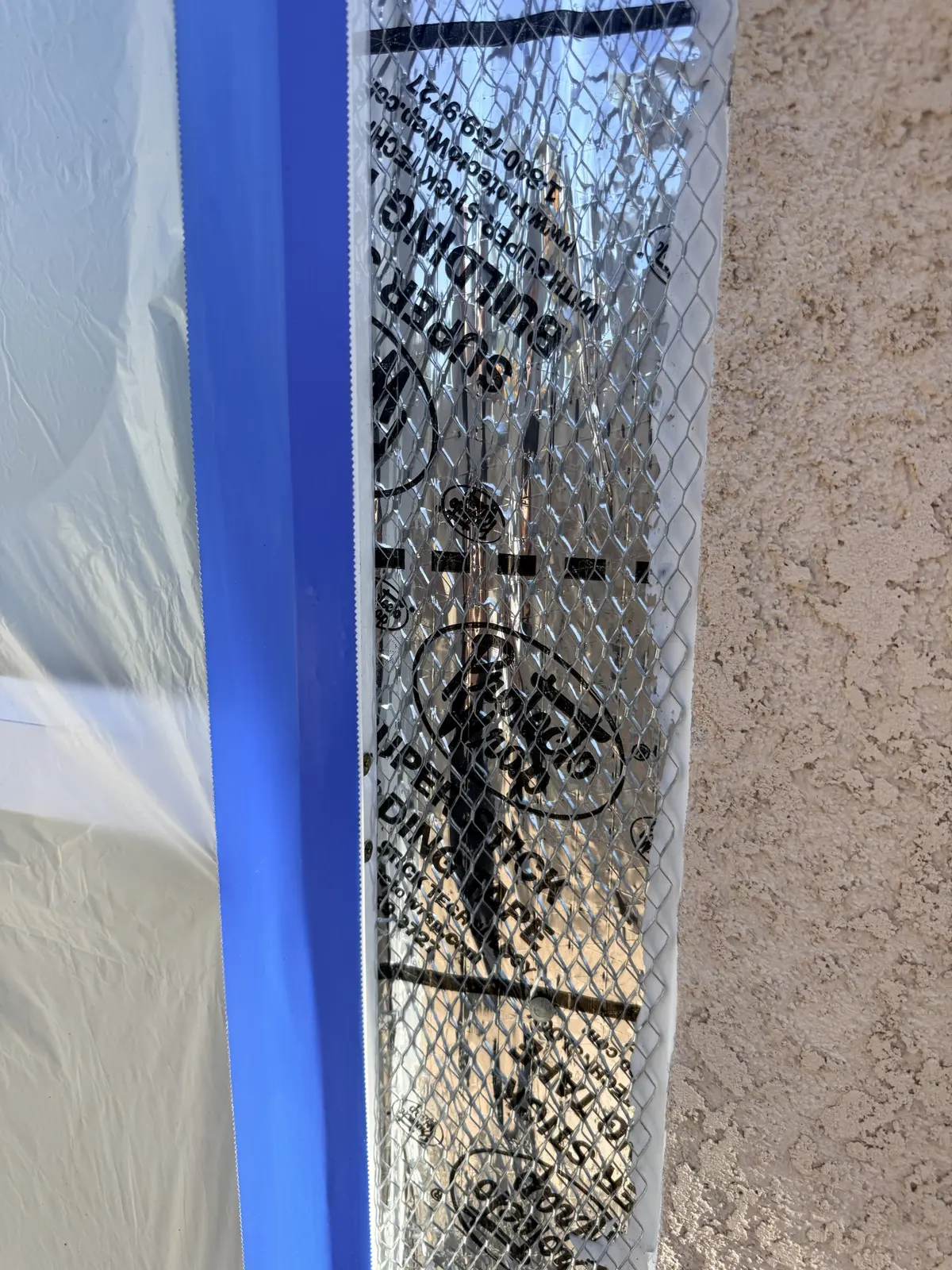
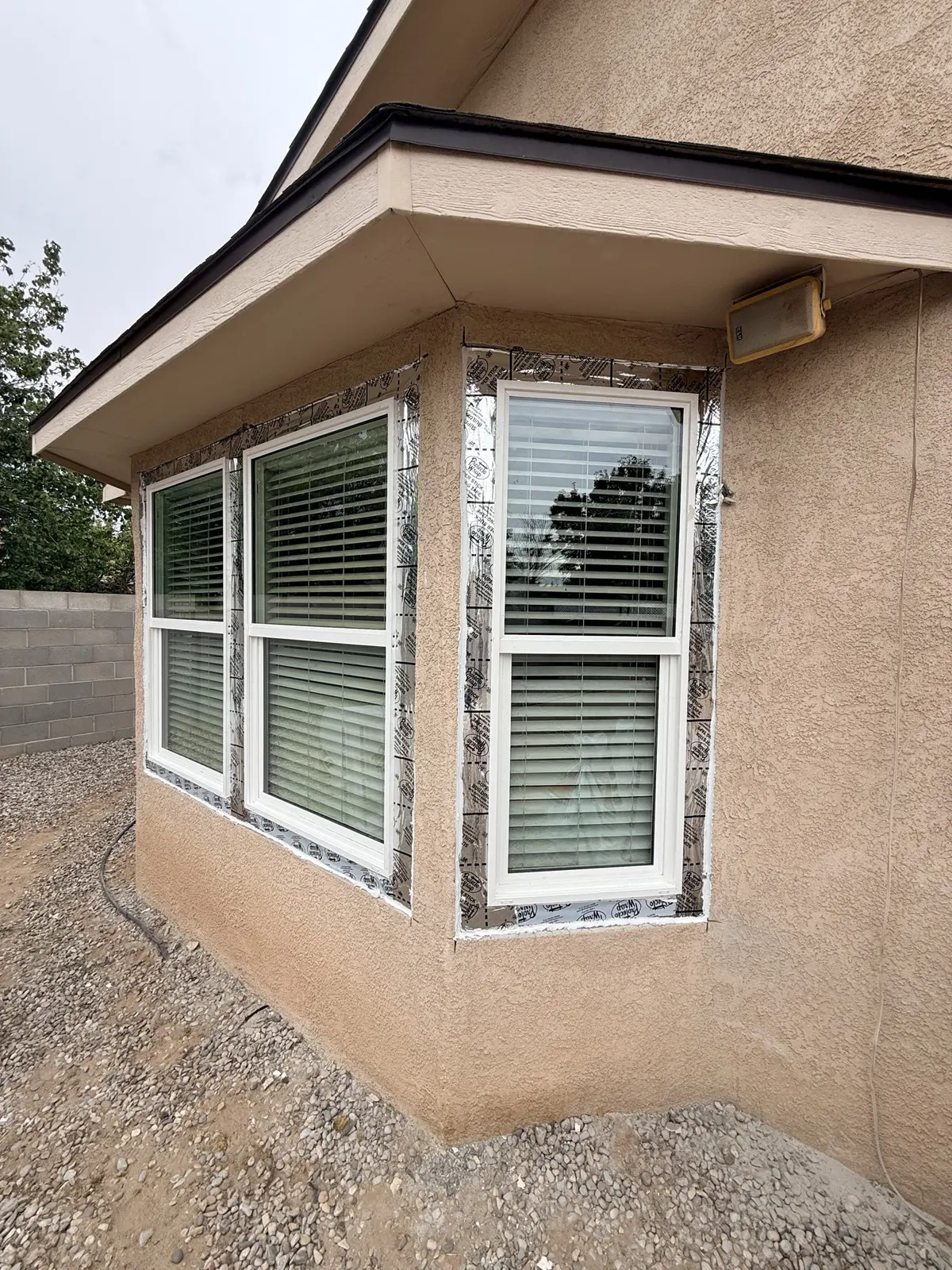
- Tape the fins. Self-adhered flashing tape seals the fins to the wall: sides first, then the head, every layer overlapping the one below.
- Paper and lath. New weather barrier woven into the old, then new lath.
- Stucco. Base coats, curing time, and a color coat matched to your wall's current color and texture.
The color match
Albuquerque stucco fades, so a 20-year-old wall is rarely the color on the original paint chip. We match the wall as it looks today, and match the texture, whether it's a light dash, sand finish or heavier skip trowel. When the wall is heavily faded or has many old patches, re-coloring a full panel between control joints can hide the repair completely. We'll talk through that before we start.
Resizing openings
Full-frame is also how openings get bigger or smaller, or how a window becomes a door. That may involve a new header and a building permit. We'll explain what's needed for your wall.
Weather
Windows go in year-round, but cement stucco needs above-freezing temperatures to cure. In winter, we may seal and protect the openings, then finish the stucco during a mild stretch.
Brick and block variations
Not every Albuquerque wall is stucco over frame. On brick or block walls, there's no stucco to cut. The old window is removed from the masonry opening, the opening is prepared, and the new window is set with flashing and sealant suited to masonry. The goal is the same: water directed out, not in.
Albuquerque homeowners want to know
How long does the stucco take to finish?
The base coats need time to cure before the color coat. In good weather that's typically a few days.
Will the stucco patch show?
The finish is matched to today's wall color and texture, faded or not. On heavily faded walls, we may suggest re-coloring a full panel so no outline shows.
Can I see the flashing before it's covered?
Yes. We're glad to show you or photograph each opening before the stucco goes back on.
Do I need a permit for full-frame replacement?
Same-size replacements are usually straightforward. Resized openings or new doors often need a permit. We check before starting.